
Advisory Notes: Why One-on-One Conversations Change Creative Cultures
Essays on creative leadership, culture, and the human side of work

Most creative cultures don’t break in view of management.
They fracture quietly — inside individuals, between pairs of people, or in moments that never quite get spoken. By the time issues surface in meetings or metrics, the real work has already been happening (or not happening) elsewhere.
That’s why one-on-one conversations matter.
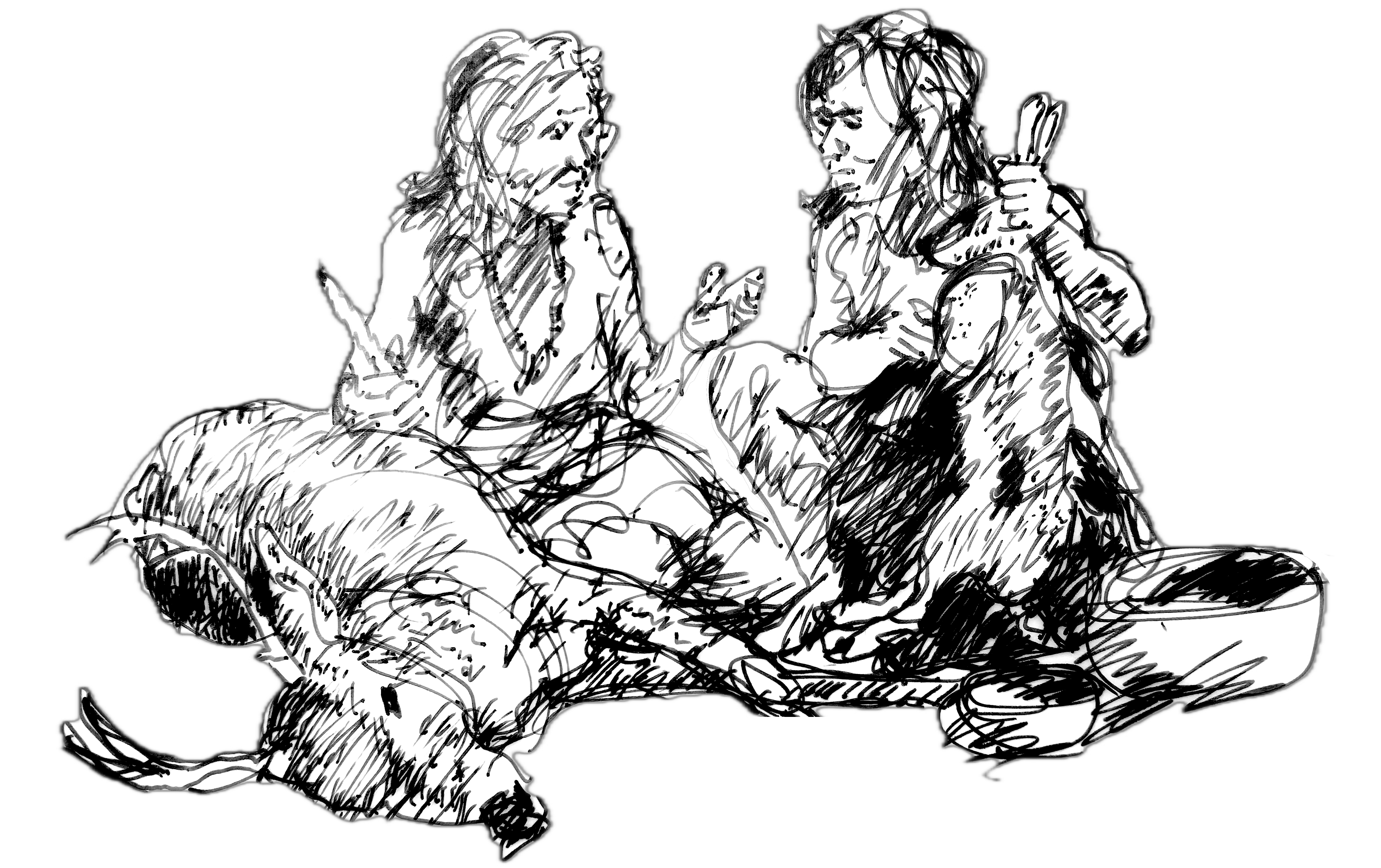
Creative work makes our evolutionary wiring visible. For roughly 300,000 years, humans survived in small cooperative groups. Safety depended on belonging. Belonging depended on reading the room. Losing standing in the group wasn’t uncomfortable — it was dangerous.
That wiring never left.
Creative cultures aren’t shaped primarily by policies, values statements, or org charts. They’re shaped by how safe it feels for people to:
think out loud
take risks
disagree
admit uncertainty
recover from mistakes
Those conditions are personal before they’re collective.
In group settings, people manage themselves. They perform competence. They protect status. They avoid saying the thing that might cost them credibility or belonging. Because somewhere in the body, exclusion still feels like threat.
In one-on-one conversations, something different becomes possible.
When a person is met without agenda, correction, or evaluation, they often begin speaking from a more honest place. Not because they are trying to be vulnerable — but because they are no longer bracing.
This is especially true in creative environments, where identity and output are intertwined. Creative people are constantly navigating self-doubt, pride, attachment to ideas, fear of irrelevance, and the need to be seen as capable. Most of that never reaches the rooms where decisions are made.
But it shapes behavior every day.
One-on-one conversations allow these undercurrents to surface early — before they harden into resentment, withdrawal, or conflict.
They also allow leaders to detect patterns.
When you speak individually with people across an organization, themes begin to repeat. The same tensions. The same misunderstandings. The same unspoken rules described from different vantage points.
That’s where culture actually lives — as it always has.
Not in what people claim to value, but in what they assume, avoid, or quietly endure.
This work isn’t traditional advising. It’s not behavioral correction. And it’s not therapy.
It’s closer to tuning an instrument.
Through steady, private conversations, individuals regain clarity. Leaders regain a felt understanding of how their presence, decisions, and blind spots ripple through the system.
Over time, shared spaces change — meetings, critiques, collaborations — without anyone being instructed to behave differently.
Trust strengthens because it’s experienced.
Conflict softens because it’s metabolized earlier.
Creativity improves because fewer people are working in self-protection.
And leaders stop guessing at what’s happening beneath the surface.
One-on-one conversations work because they honor something older than any org chart:
You don’t change culture by addressing “the group.”
You change it by attending to the humans who make it up — one conversation at a time, the way humans have always stabilized themselves.
“When a person is met without agenda, correction, or evaluation, they often begin speaking from a more honest place. Not because they are trying to be vulnerable — but because they are no longer bracing.”
There’s a real shift when someone no longer feels the need to defend or perform. Safety has a way of inviting honesty without forcing it.